An AI operating system is the layer around your business that knows the business, sees the numbers, watches what's happening, does the recurring work with you approving it, and gets built on every month.
The business in the film is fictional. Its figures are illustrations.
Read the film as text
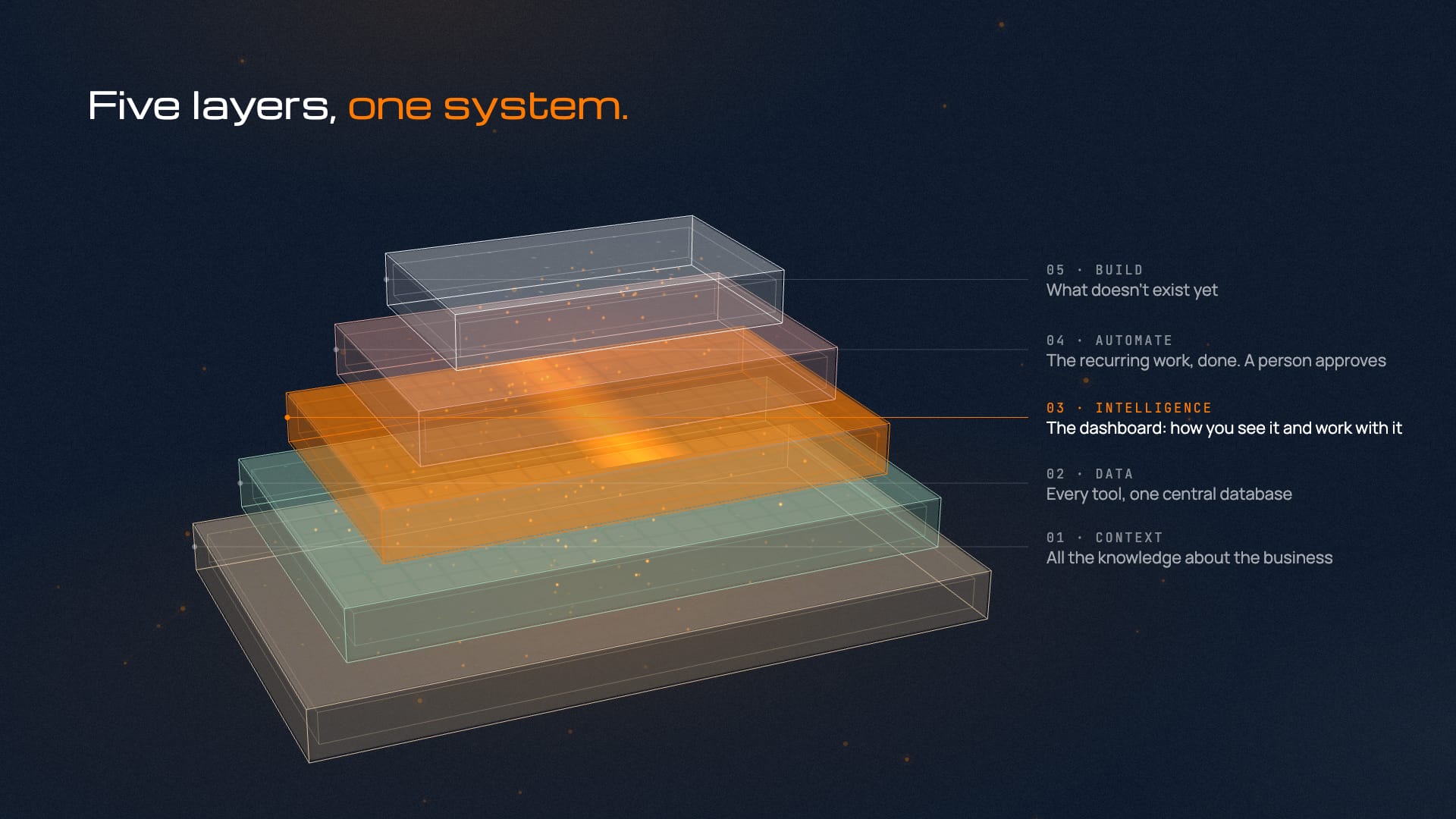
What is an AI operating system? It's the layer around your business that knows the business, sees the numbers, watches what's happening, does the recurring work with you approving it, and gets built on every month. McKinsey put a name on it in October: a second brain for the enterprise. Here's how one gets built. Five layers, and each one stands on the one below it.
The first layer is context. All the knowledge about the business. What you do, how you do it, who's on the team, your goals, your KPIs, how you make decisions. It's the foundation. Everything above it reads from it.
The second layer is data. Every tool the business already runs on: accounting, CRM, email, calendar, the field software. It all gets pulled into one central database, always on. Nobody on your team changes how they work.
The third layer is intelligence. That's the dashboard. It's how you see the data, see the analysis, and work with the automations, all from that one central database. One screen in the morning. Or a question from your phone. What's the margin this month? It answers from your own numbers.
The fourth layer is the automate layer. Every recurring task the business does today, ranked by the hours and dollars it eats, automated one at a time, biggest first. The system does the work and drafts the output. A person approves it before anything goes out.
The fifth layer is the build layer. The things that don't exist yet. You describe what you need in plain English, it gets built on top of everything below it, and it shows up on your screen as one more thing running. That's how the system grows with the business.
And they connect. Context tells the data layer what matters. Data feeds the screen. The screen is where you approve what the automations drafted. And every new build starts from everything the earlier ones already know. Five layers, one system.
For larger organizations, the same five layers become a hub. The hub holds the shared data and the rules about who sees what. Each person gets a seat and sees their own slice. And someone who needs their own system gets one, built to report into the hub.
That's an AI operating system.
 Client operations deskFirst move is yours